

THCA moon rocks are flower buds coated in THCA concentrate and rolled in kief, and yes, they hit far harder than regular flower. Around Asheville, they are the kind of product people talk about when top-shelf just does not feel top-shelf enough anymore. If you already love terpene-rich THCA flower, moon rocks are what happens when that craft foundation gets layered with oil and crystal-rich trichomes for a slower, heavier, late-night ride.
This guide keeps it honest. We will cover how moon rocks are made, how heat turns THCA into THC, why the label does not always match the lived experience, how to smoke them without wrecking your grinder or your evening, and what to check before you buy.
Introducing: Moon Rocks
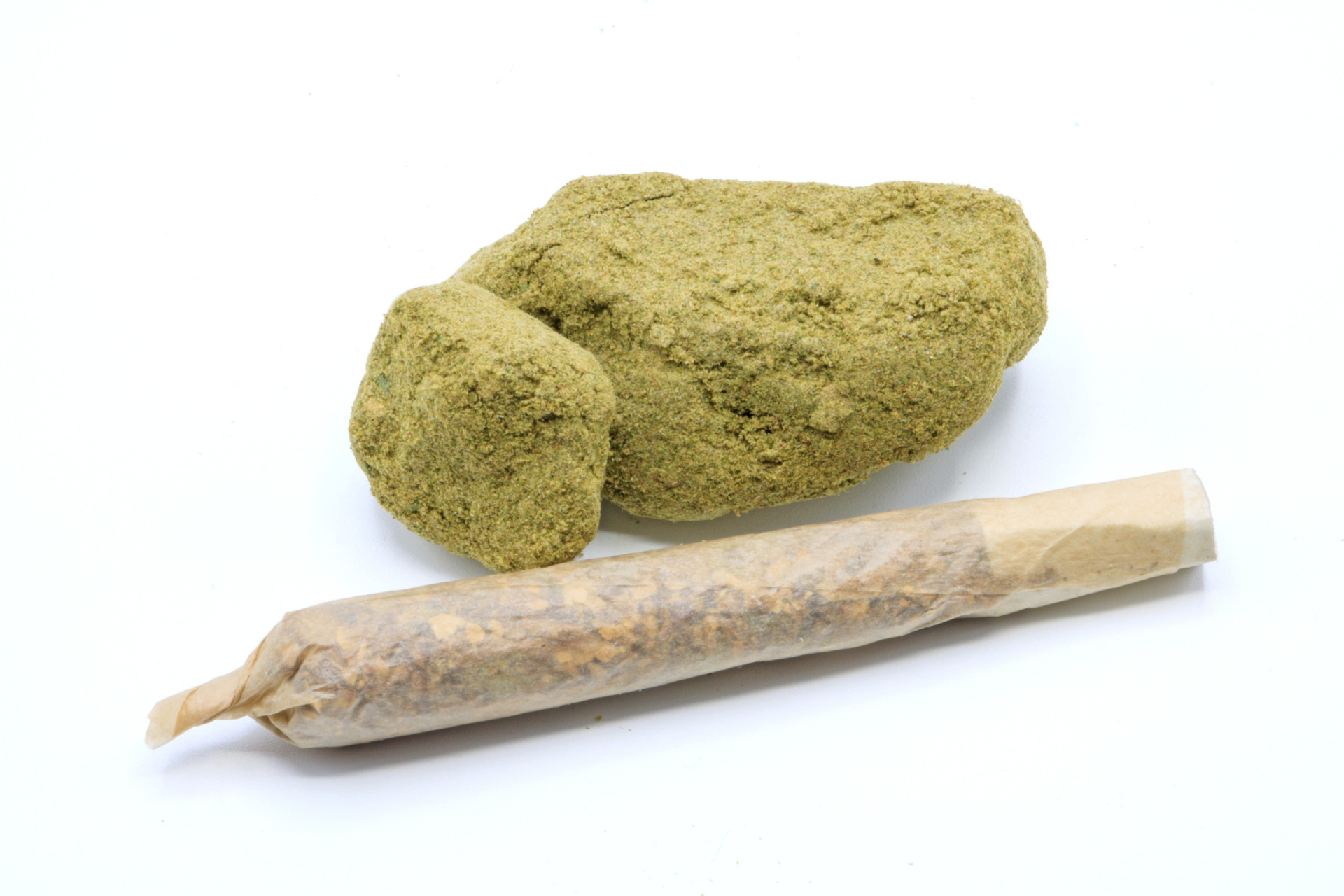
THCA moon rocks are not a strain that grows naturally in the earth; they are a multi-stage botanical creation. Think of them as the ultimate expression of cannabis craftsmanship, combining three distinct layers of the plant into one incredibly dense, potent nugget.
The foundation of any good moon rock is the core: a tight, premium bud of hemp flower. The growers select buds that are structurally sound enough to hold additional weight without crumbling. Once the perfect flower is chosen, it undergoes its first transformation. The bud is completely coated in a thick, sticky layer of THCA concentrates. This could be a warm distillate or a rich rosin, carefully brushed or dripped over the surface to create an adhesive shell.
Finally, the coated bud is rolled generously in kief. Kief consists of the pure, resinous trichome glands that have been sifted from the cannabis plant. These powdery crystals cling to the sticky concentrate, encasing the entire bud in a fuzzy, golden-green crust. The resulting product is a moon rock: a heavy, aromatic, trichome-loaded sphere that looks like a miniature asteroid and packs an extraordinary cannabinoid profile.
How THCA Becomes THC: The Science of Decarboxylation
To truly respect the moon rock, you have to understand the chemistry. In its raw form, THCA (tetrahydrocannabinolic acid) is non-intoxicating. You could eat a raw moon rock and feel absolutely no psychoactive effects. The magic only happens when you introduce heat, a process known as decarboxylation.
When heat is applied, the THCA molecule drops a carboxyl ring, converting it into active Delta-9 THC. But this process is highly dependent on temperature and time. Research demonstrating the mechanics of this conversion shows that decarboxylation starts around 90°C, takes a full 3 hours for complete conversion at 100°C, accelerates to about 10 minutes at temperatures above 160°C, and requires only seconds at 200°C. This rapid conversion at high temperatures is exactly what happens when you bring a lighter to your bowl. The sudden burst of heat flashes the THCA into active THC, delivering the immediate, powerful effects moon rocks are famous for.
How Strong Are They Really?
There is a lot of mythology surrounding cannabis potency, but the hard data paints a fascinating picture of how much stronger modern products have become. Historical analysis examining 14,234 herbal cannabis samples analyzed from 2009 to 2019 revealed that the mean THC rose from 9.75% in 2009 to 14.88% in 2018, while the THC:CBD ratio rose drastically from 24.81 in 2009 to 103.48 in 2017. Standard flower has grown mighty, but moon rocks exist on an entirely different spectrum.
Because they are fortified with concentrates and kief, moon rocks routinely test at massive cannabinoid percentages. A notable state market review assessing unregulated retail products found one moon rocks product that contained a staggering 373 mg THC per gram, while also highlighting the severe mislabeling in the industry, such as one THCA-dominant product labeled at 95.59% THCA that actually tested at just 36.6%. This vast discrepancy is why shopping for verifiable quality is non-negotiable.
Even if you find a verified, ultra-high-potency moon rock, your body does not absorb 100% of that number when you smoke it. A comprehensive laboratory analysis exploring the isolation and heating of these cannabinoids showed that maximum conversion sits around 70% in optimized analytical conditions, and only about 30% is recovered as Delta-9 THC in a real-world smoking simulation. Much of the active compound is lost to side-stream smoke and combustion degradation. However, even at a 30% recovery rate, the baseline potency of a moon rock is so high that the resulting physical and cerebral impact is profound.
No Grinding Required: Smoking Moon Rocks
Smoking a moon rock requires patience and the right tools. If you treat it like normal flower, you will waste your investment and likely ruin your hardware. Here is the Asheville-approved way to prepare and enjoy your moon rocks.
Step 1: Put the Grinder Away
Never put a moon rock in a grinder. The sticky concentrate will bind to the metal teeth, tearing the rock apart and leaving all your valuable kief stuck inside the grinder’s mechanism. Instead, use a sharp pair of scissors or a small craft knife to gently snip a small piece away from the main rock.
Step 2: Prepare a Glass Vessel
Moon rocks do not burn well in papers or blunts because the dense oil restricts airflow and causes uneven burning. You need glass – a clean pipe or a water bong is ideal.
Step 3: Create a Flower Bed
Do not place the moon rock directly over the hole in your bowl. As it heats, the concentrate will melt into a liquid resin that will instantly clog your piece. Take a pinch of standard, ground THCA flower and pack it lightly at the bottom of the bowl to act as a natural screen. Place your piece of moon rock gently on top of this bed.
Step 4: Use Gentle, Indirect Heat
Hover your lighter just above the moon rock. Don’t torch it directly, let the radiant heat melt the kief and concentrate together until it begins to bubble and produce vapor. Draw slowly and steadily. The vapor will be incredibly thick and expansive, so take a much smaller pull than you normally would.
Common Mistakes to Avoid
- Grinding the rock: Destroys your tool and wastes the concentrate.
- Packing too tight: Moon rocks are incredibly dense; packing them blocks all airflow.
- Torching the bowl: Direct, aggressive flame burns off the delicate terpenes and destroys the THCA before you can inhale it.
- Smoking without a base layer: Results in immediate glass clogs and wasted melting oil.
- Underestimating the delay: Taking multiple hits back-to-back before the first one sets in.
Effects, Onset, Duration, and Tolerance
The experience of a moon rock is layered, much like its physical construction. Because you are inhaling the combined profiles of raw flower, extracted resin, and pure trichomes, the entourage effect is magnified beautifully. The onset is usually quite rapid, settling behind the eyes within minutes before washing over the body in a heavy, relaxing wave.
The physiological impact of mixing concentrates with flower is undeniable. Clinical reviews comparing consumption methods demonstrate this starkly; studies indicate that concentrate sales rose 444% in Colorado’s first four years of legalization, driven by products with an average concentrate potency around 52% THC, which produced blood THC levels around 321 ng/mL for concentrate users compared to just 140 ng/mL for standard flower users. That intense jump in blood serum levels is why moon rocks deliver such a profound, lasting impact. The same review cautions that the use of higher-potency products at onset is correlated with a quadrupled risk of CUD symptoms within the first year, making moderation vital.
A moon rock session is not a brief detour; it is an hours-long commitment. The deep physical relaxation and cerebral elevation can easily last anywhere from four to six hours. This extended duration makes it a favorite for those who prefer a long, settled session without needing to continuously reload. However, regular use of such high-potency items will rapidly increase your natural tolerance, making standard flower feel less effective over time. We recommend treating moon rocks as a special occasion addition to your routine rather than an everyday necessity.
Moon Rocks vs. Regular Flower
If you are trying to decide whether to stick to your trusted Appalachian-grown buds or step up to a moon rock, it helps to see the differences laid out plainly.
| Feature | Standard THCA Flower | THCA Moon Rocks |
| Composition | Raw, cured botanical bud | Bud + Concentrate Oil + Kief Dusting |
| Preparation | Grinds easily, great for rolling | Requires snipping, ruins grinders, needs glass |
| Potency Range | Usually 15% to 30% Total Cannabinoids | Often 40% to 60%+ Total Cannabinoids |
| Aroma & Flavor | True to the plant’s natural terpene profile | Intensely rich, often blending multiple strain profiles |
| Burn Rate | Steady and predictable | Slow, smoldering, and resinous |
| Best Setting | Daytime hikes, social events, casual evenings | Late night, deep relaxation, cleared schedules |
The Legal Landscape (It’s Not Rocket Science)
The scope of cannabis law can be confusing, but the framework for THCA moon rocks rests on specific federal guidelines. Under the 2018 Farm Bill, hemp is legally defined as any cannabis plant, or derivative thereof, that contains no more than 0.3% Delta-9 THC on a dry weight basis. Because THCA is an acidic precursor and not active Delta-9 THC, flower and concentrates that fall below this Delta-9 threshold are federally classified as legal hemp.
However, legality is a dual-layered system. While the federal government has established this framework, individual states maintain their own agricultural and controlled substance policies. Some states have specifically banned THCA, implemented “total THC” testing rules that account for the post-decarboxylation conversion, or restricted the sale of smokable hemp entirely. It is crucial to stay informed about your local jurisdiction’s evolving rules. For a comprehensive look at how we navigate these regulations to ship safely, you can review our legal compliance and FDA disclosure.
How to Shop for Quality and Read a COA
When purchasing a product this powerful, you cannot afford to guess what is inside the jar. The craft cannabis market thrives on transparency. As we noted earlier regarding the massive mislabeling found in state retail audits, flashy packaging means absolutely nothing if the product inside is subpar or mathematically impossible. You need a Certificate of Analysis (COA).
A COA is a document generated by an accredited, third-party laboratory that tests the batch of cannabis for potency and purity. Any reputable dispensary will provide one willingly; in fact, you can view exactly how we display our batch testing data right here. When evaluating a moon rock COA, look for these three key elements:
- Delta-9 THC Compliance: The report must show that the Delta-9 THC level is at or below the 0.3% legal limit. If it is higher, you are looking at a federally non-compliant product.
- THCA Potency: This confirms you are getting what you paid for. If the label claims 55% THCA, the lab report should reflect a number very close to that.
- Safety Screenings: Because moon rocks use concentrates, it is imperative that the COA includes testing for residual solvents, heavy metals, and pesticides. Clean extraction leaves no chemical footprints.
Safety, Storage, and Beginner Tips
We believe in a grounded, wellness-oriented approach to cannabis. Please note that the information provided here is for educational purposes and is not medical advice. Human physiological responses to cannabinoids are deeply complex, a fact underscored by extensive academic inquiry—such as the Johns Hopkins cannabis research program, which has produced 16 peer-reviewed publications and over 1,023 citations on the subject.
If you are venturing into moon rocks for the first time, treat them with immense respect. Hydrate well before you begin. Make sure you are in a comfortable, familiar environment with nowhere to be. Take one small, gentle draw, and step away from the pipe for at least twenty to thirty minutes. The creeping onset of high-potency concentrates can catch even veteran consumers off guard.
Proper storage is just as important as proper consumption. Moon rocks are highly sensitive to their environment. Keep them in an airtight glass jar, stored in a cool, dark place away from direct sunlight. If they get too warm, the concentrate layer will melt off the flower, creating a messy pool of resin at the bottom of your jar and ruining the carefully crafted layers.
Where to Buy and Who They Suit Best
Moon rocks are not for the faint of heart, nor are they the best choice for someone looking for a quick, functional daytime lift. They are tailor-made for the seasoned botanical enthusiast who has developed a robust tolerance and is seeking a profound, multi-dimensional experience. They suit the patient slow-smoker, the evening relaxer, and the cannabis aficionado who appreciates the art of extraction combined with elite agriculture.
When you are ready to elevate your botanical journey, sourcing your products from a trusted, community-focused provider is paramount. We invite you to explore our carefully curated dispensary collections, where transparency, clean farming practices, and Appalachian craft values come together to bring you the finest hemp-derived experiences available.
Elevating the Mountain Standard
The craft cannabis movement is continually evolving, finding new ways to highlight the incredible versatility of the hemp plant. THCA moon rocks represent a brilliant intersection of traditional flower cultivation and modern extraction artistry. They demand respect, careful preparation, and an appreciation for the slow, immersive experiences they provide.
By understanding the science of decarboxylation, acknowledging the true potency metrics, and respecting the craftsmanship required to smoke them properly, you unlock a completely new tier of botanical enjoyment. Keep your glassware clean, demand those third-party lab reports, and take the time to savor the rich, resonant journey that a true, high-quality moon rock delivers.


