

There’s nothing quite like wrapping up a long hike off the Blue Ridge Parkway, settling onto the porch, and unwinding with a deeply colorful, frosty bud. Here in Asheville, where art, music, and mountain energy blend together, we appreciate things that look as good as they feel. Enter purple THCA flower. It’s undeniably striking, but there’s often a bit of confusion about what that vivid violet hue actually means. Is it naturally grown? Is it more potent? Will it get you high?
To cut right to the chase: purple THCA flower is essentially high-THCA hemp flower that has developed purple pigment due to specific genetics and growing conditions. Like all raw THCA flower, it absolutely can get you high when heated. However, that gorgeous purple color does not automatically mean a stronger experience. Whether you’re dipping into a fresh THCA flower collection for the first time or you’re a seasoned veteran of the local river-float sessions, it pays to know the science behind your stash.
Quick Answers
- What is it? Raw hemp flower with high levels of THCA and naturally occurring purple pigments (anthocyanins).
- Will it get you high? When smoked, vaped, or baked, the heat converts non-psychoactive THCA into psychoactive Delta-9 THC.
- Is purple stronger? Not inherently. Color comes from plant flavonoids, not cannabinoids. Potency depends on the strain’s genetics, not its hue.
- Why does it turn purple? A mix of specific DNA markers and cool temperature exposure triggers the production of purple antioxidants.
- How to shop safely? Always look for third-party lab reports to verify true cannabinoid levels and clean growing practices.
Understanding THCA Basics and the Federal Formula
Before we dive into the colors, let’s talk about the chemistry. THCA stands for tetrahydrocannabinolic acid. It is the raw, unheated precursor to Delta-9 THC. If you were to eat a raw purple cannabis bud off the stem, you wouldn’t feel intoxicated because THCA doesn’t bind to the CB1 receptors in your brain in the same way THC does. The magic happens during decarboxylation, a fancy word for applying heat via a lighter, vaporizer, or oven.
When shopping for legal hemp, understanding how potency is calculated is crucial. Agricultural standards and legitimate third-party Certificates of Analysis (COAs) don’t just add THCA and Delta-9 THC together 1-to-1. Because the THCA molecule loses a bit of weight (a carboxyl group) when it converts to THC, the federal total-THC formula uses a specific calculation: THCA x 0.877 + Delta-9 THC. This accounts for the conversion loss and gives you an accurate picture of the final active THC potential you’re bringing home to your porch.
The Science of the Purple Hue
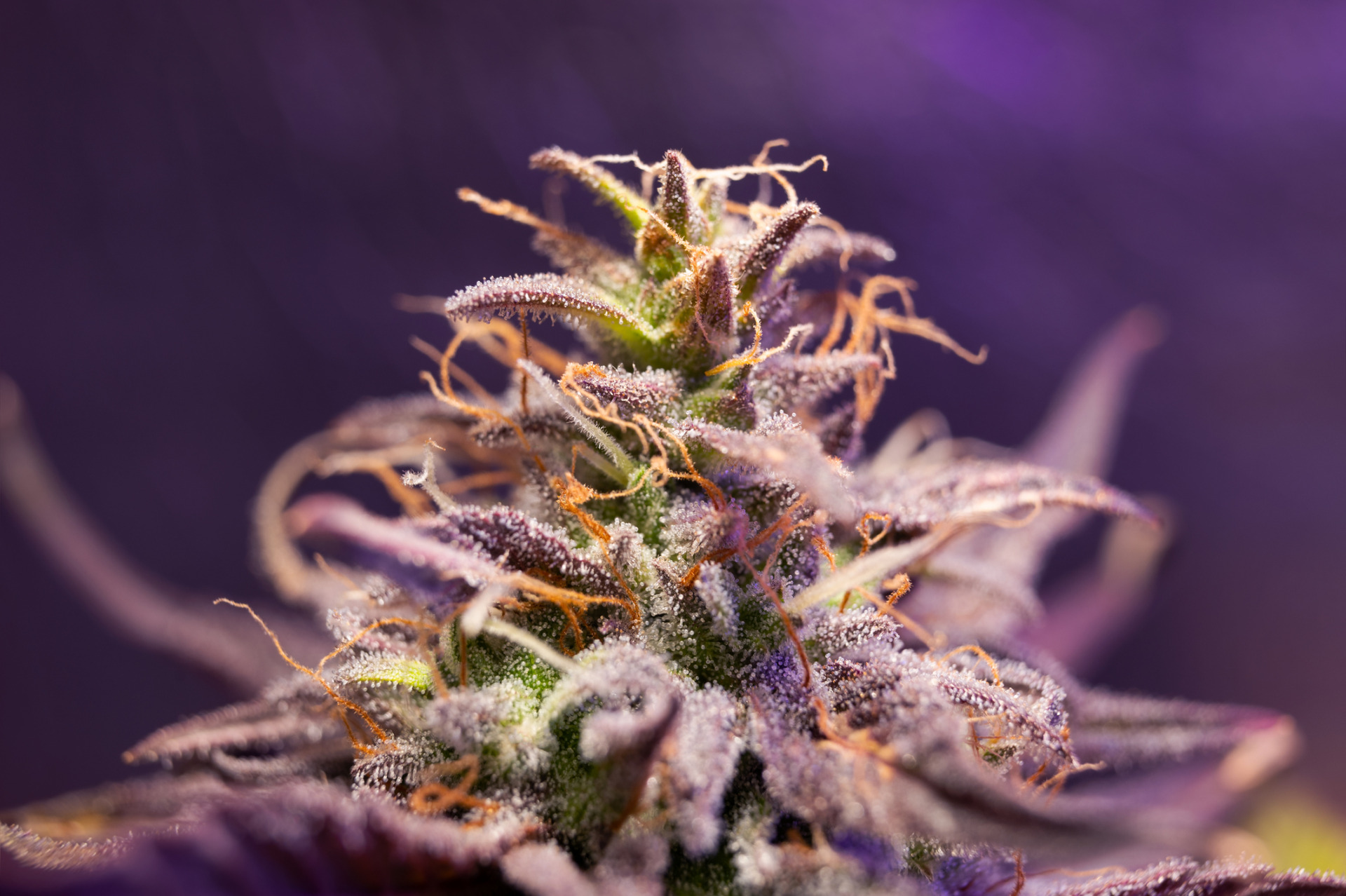
So, why do some buds turn a deep, vibrant amethyst while others stay emerald green? It’s not magic, and it’s certainly not food coloring. It comes down to genetics and a specific type of plant pigment called anthocyanins – the exact same compounds that give blueberries and red cabbage their color.
Recent academic work has cracked the code on exactly how this works in cannabis. Researchers identified a chromosome 6 marker cluster tied directly to flower anthocyanin production. According to that University of Wisconsin thesis, this specific genetic region explains about 67% of the purple flower variation in cannabis. In other words, a plant’s ability to turn purple is heavily hardwired into its DNA. The same research also highlighted the sheer popularity of these genetics, noting there are at least 225 strains with “Purple” officially in the name.
On a molecular level, the exact compound doing the heavy lifting has also been pinpointed. A comprehensive study identified keracyanin (cyanidin-3-rutinoside) as the major anthocyanin in purple cannabis. Amazingly, the researchers reported that the highly pigmented tissues of these cannabis strains actually contained higher levels of this beneficial antioxidant than black currant berries, which are famously prized for their anthocyanin content.

Myth-Busting: Purple Doesn’t Mean More Potent
One of the oldest campfire myths is that purple weed is inherently stronger than green weed. That’s simply not true. The flavonoids that create the purple color operate completely independently from the trichomes that produce cannabinoids like THCA.
However, the confusion makes sense when you look at the timeline. Over the past few decades, cannabis breeders have heavily favored crossing highly potent strains with visually striking purple strains. A study tracking historical data showed that the average THC potency in DEA-seized cannabis rose steadily from about 4% in 1995 to roughly 12% in 2014, and the numbers have only climbed since. Today’s purple strains are incredibly potent, but that’s a result of modern breeding techniques, not the color itself.
Potency Verification and Consumer Protection
Because today’s cannabis market is booming, marketing hype occasionally outpaces reality. If you see a jar of purple THCA flower boasting astronomical, unbelievable numbers, it pays to be skeptical.
A rigorous market study revealed that the average observed THC was 23.1% lower than the lowest label value on retail packaging. Even more concerning, about 70% of the tested retail samples were more than 15% below the potency printed on the label.
This is why we constantly harp on the importance of verifying your purchases. Don’t just trust a shiny label. You should always look for a current, batch-specific Certificate of Analysis. You can check out our COA page to see what a proper, transparent lab report looks like. Ensuring your flower has been tested not just for potency, but for pesticides and heavy metals, is the best way to guarantee safety and quality in your sessions.
COA Check, Fast
- Match the batch: The lot number on the flower should match the lot number on the report.
- Check the date: Fresh testing beats dusty PDFs from months ago.
- Read total THC: Look at the calculated total, not just the big THCA sticker number.
- Scan contaminants: Potency matters, but clean flower matters more.
How Temperature Affects Purple Expression
Even if a strain has the genetic potential to turn purple (that chromosome 6 marker we mentioned earlier), it often needs an environmental nudge to express those beautiful colors fully. For anyone curious about how THCA flower is made and cultivated, temperature control is the secret weapon.
During the late flowering stage, exposing the plants to cooler temperatures mimics the arrival of autumn, causing the green chlorophyll to break down and allowing the purple anthocyanins to shine through. Cultivation research has shown that dropping temperatures to exactly 8°C and 15°C (that’s roughly 46.4°F and 59°F) produced peak anthocyanin accumulation. If a grower keeps a purple-genetics room too warm, the buds might stay completely green!
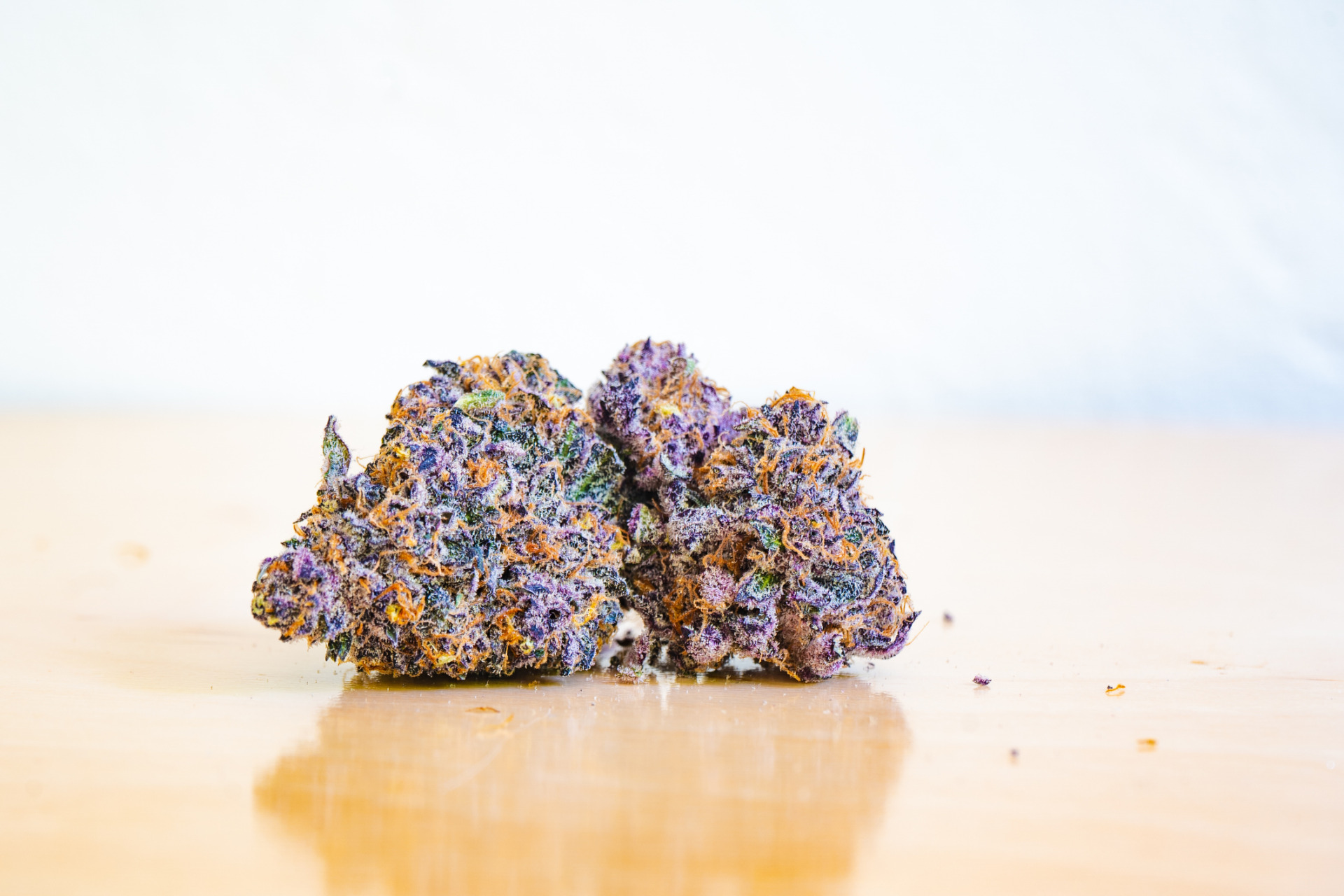
10 Purple Strains Worth Knowing
Ready to explore the violet side of the menu? Because every harvest is a little different, we focus on the flavor, vibe, and effects of these legendary strains rather than pinning down exact, fluctuating batch percentages. Here are ten standout purple strains you should know.
1. Granddaddy Purple (GDP)
The undisputed king of the purple mountain. GDP delivers a distinct grape and berry aroma with deeply relaxing, heavy-bodied effects. It’s the ultimate evening strain for when you want to sink into the couch after a long week.
2. Purple Punch
This fan favorite smells like a freshly baked blueberry muffin. It usually opens with a bright, euphoric lift before settling into a warm, comfortable body buzz.
3. Purple Kush
A pure indica classic with an earthy, slightly sweet sandalwood profile. It’s perfect for total physical relaxation and setting the tone for a deep night’s sleep.
4. Purple Haze
Yes, like the song. Unlike the heavy indicas above, Purple Haze leans heavily sativa. It offers a high-energy, creative, and uplifting buzz with a sweet, earthy, and slightly spicy flavor profile. Great for a daytime hike or making art.
5. Grape Ape
Famous for its dense, tightly packed buds and unmistakable artificial-grape scent. Grape Ape is a soothing, slow-moving strain that melts away tension and leaves you feeling carefree and perfectly lazy.
6. Purple Urkle
A mysterious old-school classic with a flavor that lands somewhere between skunk, berry, and fresh grapes. Expect fast, physical relaxation that feels tailor-made for winding down.
7. Blackberry Kush
A beautifully dark, trichome-drenched strain that tastes exactly like a bowl of dark berries mixed with jet fuel. It provides a heavy, spacey relaxation that is best saved for late-night sessions when your schedule is entirely clear.
8. Gazzurple
A modern masterpiece with a wild flavor profile mixing diesel gas, sweet berries, and tart cream. It tends to offer a balanced, hybrid experience—stimulating enough for a social evening but relaxing enough to keep you grounded.
9. Trop Cherry
Visually stunning, often expressing as a bright magenta rather than deep purple. Trop Cherry is an uplifting, functional hybrid that tastes like sweet cherries and citrus. It’s an excellent companion for a sunny afternoon in Asheville.
10. Ice Cream Cake (Purple Phenotype)
While often green, certain phenotypes of Ice Cream Cake express beautiful violet hues. It tastes like sweet, creamy vanilla dough and delivers a thoroughly sedating, happy, and euphoric nighttime experience.
Matching Purple Strains to Your Vibe
Finding the right strain is all about matching it to your current goal. Remember, it’s not just the THCA doing the work; the terpene profiles interact with the cannabinoids to steer your experience.
For Deep Relaxation and Sleep
If your goal is to shut down your racing thoughts and drift off, you want the classic heavy-hitters. Look for Granddaddy Purple, Purple Kush, or Grape Ape. These strains are traditionally rich in myrcene, a terpene known for its sedating, couch-lock effects.
For Daytime Uplift and Creativity
Want a splash of color without the nap? Purple Haze and Trop Cherry are your best bets. They offer the beautiful visual appeal of purple buds but carry uplifting, sativa-leaning effects that are great for socializing or tackling a creative project.
For a Flavor-First Session
If you’re rolling up purely for the sensory experience, Purple Punch and Gazzurple offer some of the most complex, mouth-watering flavor profiles in the modern cannabis world, blending sweet bakery notes with sharp, tart fruit.
The Blue Ridge Takeaway
Whether you’re packing a bowl for a quiet night listening to the crickets or rolling something special for a weekend out in the mountains, purple THCA flower brings an undeniable visual joy to the ritual. By understanding the science of anthocyanins, respecting the conversion of THCA to THC, and demanding honest lab reports, you can ensure your colorful stash is as safe and potent as it is beautiful. Stay elevated, stay informed, and enjoy the true colors of the plant.
Note: The information provided in this guide is for educational purposes only. THCA products should be used responsibly by adults 21 and over. Statements regarding therapeutic effects have not been evaluated by the FDA. Always consult with a healthcare professional before starting any new wellness routine, and be aware of your local laws regarding hemp-derived cannabinoids.


