

If you’ve been buying THCA flower and wondering whether you could just grow it yourself, you’re not alone. The question comes up constantly — and the answer is more complicated than most people expect. Short version: no, you cannot legally grow THCA flower at home, even in states where buying and possessing it is perfectly legal. The rules around cultivation are entirely separate from the rules around retail, and the gap between those two frameworks trips up a lot of people who assume that because they can buy it, they can grow it.
This article breaks down exactly what federal law says about hemp cultivation, why North Carolina specifically does not allow home growing of any cannabis plant, what the total THC testing problem means for even licensed growers attempting to produce high-THCA flower, and what is changing at the federal level in November 2026 that makes this an especially important question to get right now.
What Does “Growing THCA Flower” Mean Legally?
Before getting into the law, it helps to understand what you’re actually asking when you ask whether growing THCA flower is legal.
THCA flower is hemp flower — cannabis plants that test below 0.3% delta-9 THC by dry weight at the point of harvest. That classification is what makes it legal to sell, ship, and possess under current federal law. The plant itself is genetically identical to marijuana. The legal distinction comes entirely from a lab test taken at a specific point in the plant’s life cycle, measuring one specific cannabinoid — delta-9 THC — before the plant is harvested.
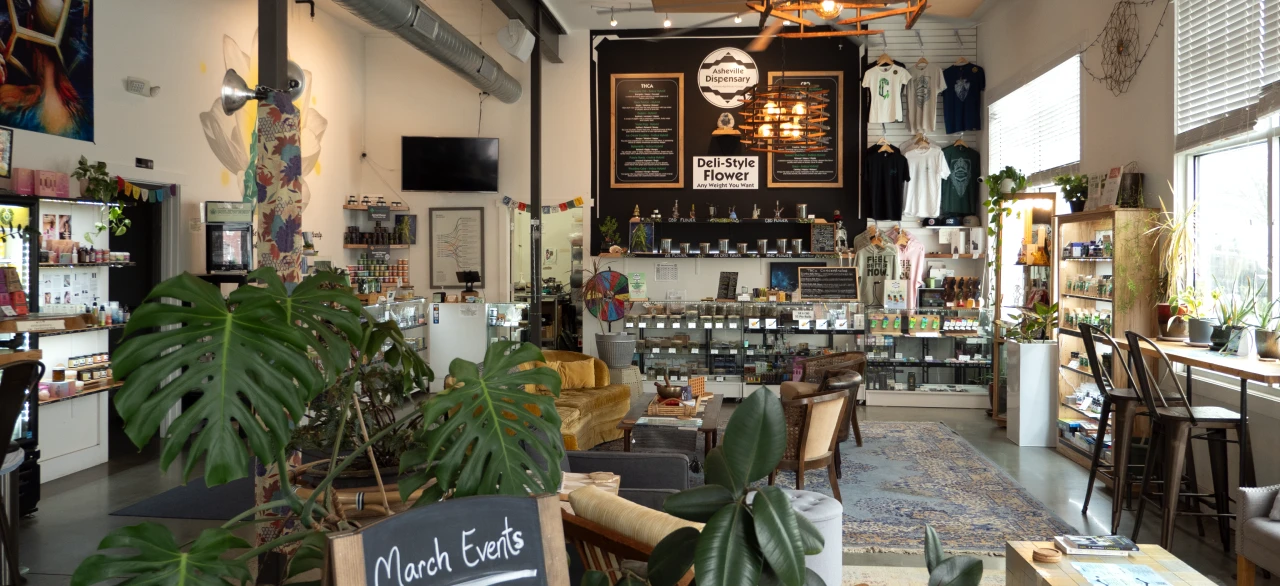
The question of whether you can grow it, however, is entirely separate from whether you can buy or possess it. Federal law and state law both treat cultivation as a distinct category of activity with its own rules, its own licensing requirements, and its own penalties for non-compliance. A consumer in North Carolina can legally walk into Asheville Dispensary and buy THCA flower today. That same consumer cannot go home and plant THCA seeds in their backyard. These are two different legal questions with two different answers.
Federal Law: Hemp Cultivation Requires a License
The 2018 Farm Bill — the Agricultural Improvement Act — legalized hemp production in the United States for the first time since the Controlled Substances Act classified all cannabis as a Schedule I drug in 1970. But it did not legalize hemp growing for everyone. It created a regulated cultivation framework that requires producers to obtain authorization before planting a single seed.
The USDA is explicit on this point: a hemp license is required to legally produce hemp, and it must be granted by either the USDA or a state or tribal government. There is no home grow exemption. There is no personal use carve-out. There is no small-scale exception for hobbyist growers or individuals who simply want to produce their own supply. The licensing requirement applies to every person who cultivates hemp, regardless of quantity, regardless of intent, and regardless of whether the plants would have tested compliant at harvest.
To legally grow hemp under the federal framework, a producer must:
- Obtain a state-issued or USDA-issued cultivation license before planting
- Register all growing locations — including GPS coordinates — with the Farm Service Agency
- Submit to pre-harvest testing by a USDA-approved laboratory within 30 days of anticipated harvest
- Maintain records available for inspection by state and federal authorities
- Destroy any crop that tests above the legal THC threshold — at the grower’s expense, with no compensation
This is a commercial agriculture framework built for farmers, processors, and licensed operators. It is not designed for individuals who want to grow a few plants for personal use, and it makes no accommodation for them. A private individual who plants hemp seeds without a license is not growing hemp under the law — they are growing unlicensed cannabis, which remains a violation of the Controlled Substances Act regardless of what the plants would have tested at.
The Testing Problem: Why THCA Flower Is Hard to Grow Even With a License
Even for licensed hemp farmers, producing high-THCA flower is legally and agriculturally complicated in a way that growing CBD hemp is not. This is because of how hemp is tested for compliance at harvest — and it creates a specific problem for anyone trying to produce the kind of high-potency THCA flower that consumers are buying at retail.
Federal hemp testing uses a formula called the “total THC” standard for pre-harvest compliance. The formula is: delta-9 THC + (0.877 × THCA). The 0.877 factor accounts for the molecular weight lost when THCA decarboxylates into delta-9 THC. Applied to a plant testing at 25% THCA and 0.2% delta-9 THC — a fairly typical profile for retail THCA flower — the calculation looks like this:
0.2% + (0.877 × 25%) = approximately 22.1% total THC
That number is catastrophically above the 0.3% legal threshold. Under the pre-harvest testing standard applied to cultivators, that plant is not hemp. It is marijuana. The farmer who grew it is not a hemp producer. They have a marijuana crop — and federal law requires them to destroy it.
Licensed hemp farmers who have built businesses around THCA flower have navigated this problem by arguing that the total THC pre-harvest standard applies only to crop compliance testing, not to finished consumer products sold at retail. That argument has held up in several federal court decisions, and it is why THCA flower exists as a legal retail product at all. But it is a legal gray area that requires sophisticated legal counsel, careful documentation, and ongoing compliance management. It is not a framework that extends to unlicensed home growers under any interpretation.
For a private individual without a license, none of this matters. There is no gray area to navigate. Growing cannabis plants without a cultivation license is illegal, and the legal status of what those plants would have tested at is irrelevant to the charge.
Is It Legal to Grow THCA Flower in North Carolina?

In North Carolina specifically, the answer is an unambiguous no — on two separate grounds.
First, marijuana cultivation is illegal under North Carolina state law outside of tribal jurisdiction. Possession of marijuana plants is treated as a criminal offense, with penalties that escalate based on plant count and the weight of any harvested material. The Eastern Band of Cherokee Indians operates under tribal law within the Qualla Boundary, where different rules apply — but that exception covers a narrow geographic area and has no bearing on private cultivation by non-tribal members anywhere else in the state.
Second, hemp cultivation in North Carolina requires a state license through the NC Department of Agriculture, established under the NC Farm Act of 2019. The NC Department of Health and Human Services’ Advisory Council on Cannabis has confirmed that North Carolina currently has significant regulatory gaps in its hemp framework and that marijuana cultivation remains illegal under state law outside of federally recognized tribal lands. The state’s licensed hemp program is a commercial agricultural program. It does not include any provision for personal or home cultivation of hemp — including high-THCA hemp flower.
There is an additional practical problem specific to North Carolina that applies even to people who might try to argue that their plants are legal hemp. Law enforcement in NC — as in most states — assesses cannabis plants visually, not chemically. A cannabis plant growing in your backyard looks identical whether it would have tested at 0.2% delta-9 THC or 20% delta-9 THC. Officers do not need to test it before making an arrest. Proving that your plants were compliant hemp requires laboratory testing that happens after harvest — not before you are charged. The legal risk of growing unlicensed cannabis in North Carolina, regardless of the genetics, is real and significant.
The DEA’s Position on THCA and Why It Matters for Growers
There is another layer of federal legal uncertainty that specifically affects anyone thinking about growing THCA flower, even with a license.
The DEA has argued for several years that THCA should be counted as part of “total available THC” because its conversion to delta-9 THC upon heating is essentially inevitable. Under the DEA’s position, a plant or product with high THCA content is effectively a high-THC product regardless of what its delta-9 reading shows at harvest. If the DEA’s interpretation were to prevail, high-THCA flower would not qualify as legal hemp at any point in the production chain — including at harvest — and growing it under a hemp license would not provide the legal protection that licensed farmers currently rely on.
Federal courts, including the Fourth Circuit and Ninth Circuit, have largely pushed back on this position through 2024 and 2025, affirming that delta-9 THC content is the operative metric for distinguishing legal hemp from controlled cannabis under current law. But the DEA’s position has not been formally withdrawn, and it creates an ongoing layer of legal risk for anyone producing high-THCA flower — licensed or not.
For unlicensed home growers, the DEA’s position is simply one more reason why growing THCA flower carries significant legal exposure. For licensed commercial producers, it is a compliance risk that requires active legal management. Neither scenario applies to someone buying tested, documented THCA flower from a licensed retailer.
What Is Changing on November 12, 2026?
The federal legal landscape for THCA flower is already shifting dramatically, and the timeline matters both for buyers and for anyone thinking about growing their own.
P.L. 119-37, signed into law in November 2025 and effective November 12, 2026, rewrites the federal definition of hemp to adopt the total THC standard — meaning THCA counts toward the 0.3% limit at every point in the production chain, not just at pre-harvest testing. Once that takes effect, virtually all high-THCA flower currently on the market will be reclassified as marijuana under federal law. Products that test at 25% THCA and 0.2% delta-9 THC — compliant under today’s framework — will be federally illegal marijuana the day P.L. 119-37 takes effect.
For growers specifically, the implications are severe. A licensed hemp farmer who plants a high-THCA crop in spring 2026 and harvests it in fall 2026 could find that their legal crop becomes an illegal marijuana crop between planting and harvest — with no legal path to sell it, process it, or ship it interstate. The destruction and disposal costs fall on the farmer. There is no compensation mechanism.
For private individuals considering growing their own THCA flower at home: this is the worst possible moment to start. The legal window that made high-THCA hemp flower possible at all is closing. What remains after November 2026 will be governed by state marijuana law — and North Carolina does not have a legal adult-use marijuana program, has no medical marijuana cultivation pathway for patients or caregivers, and has no timeline for establishing one.
There is a bipartisan effort in Congress — H.R. 6209, introduced in November 2025 — to repeal the hemp provisions in P.L. 119-37. But its passage is uncertain, and planning around legislation that has not passed is not a compliance strategy.
Why Buying From a Licensed Retailer Is the Practical Path
Most people who ask about growing THCA flower at home are motivated by two things: cost and the appeal of knowing exactly what they’re consuming. Both are legitimate concerns. Both are also better addressed by buying from a licensed, transparent retailer than by attempting to grow your own.
On cost: growing cannabis — even hemp — requires meaningful upfront investment in genetics, growing medium, lighting or outdoor space, nutrients, and drying and curing equipment. For a home grower without a license, that investment also comes with ongoing legal exposure. The cost-per-gram of home-grown cannabis looks attractive until you factor in the risk.
On knowing what you’re consuming: a COA from a third-party laboratory tells you exactly what is in a specific batch of flower — THCA percentage, delta-9 THC compliance, terpene profile, pesticide screen, heavy metals panel, and microbial testing. Home-grown flower has none of that unless you pay for independent testing yourself. A retailer who publishes COAs for every product is giving you more information about what you’re consuming than you would get from growing your own.
Asheville Dispensary carries THCA flower across four tiers — Private Reserve, Exotic, Greenhouse, and Small Buds — all third-party tested, all available with full COA documentation, and all currently shippable to most states under federal law. That shipping access closes November 12, 2026. If you’ve been sitting on the fence, the window to order is now, not later.
Frequently Asked Questions
Can I grow one THCA flower plant at home legally?
No. There is no home grow exemption under federal hemp law, and no personal use exception for any quantity of plants. Even a single cannabis plant requires a state-issued or USDA-issued cultivation license to grow legally. In North Carolina, growing any cannabis plant without a license — regardless of what it would test at — is illegal under state law and potentially under federal law as well. The number of plants does not create a legal gray area here.
What if I buy THCA seeds online — is that legal?
Purchasing hemp seeds is legal in most states, including North Carolina, when those seeds come from a licensed producer and the transaction involves documented hemp genetics. Planting those seeds without a cultivation license is a separate act that is not covered by the legality of the purchase. Owning seeds and cultivating plants are treated differently under both federal and state law.
Is hemp cultivation legal in North Carolina with a license?
Yes — commercial hemp cultivation is legal in North Carolina under a state license issued through the NC Department of Agriculture. The licensed program covers commercial agricultural production. It does not include any provision for home growing, personal cultivation, or small-scale unlicensed production. If you are interested in licensed hemp cultivation in NC as a commercial enterprise, the NC Department of Agriculture’s Industrial Hemp Program is the starting point.
Does the total THC formula apply to home growers?
The total THC pre-harvest testing standard technically applies to licensed producers. Home growers do not go through the licensed testing process because they are not legally authorized to grow hemp at all. For an unlicensed home grower, the question of whether their plants would pass a total THC test is moot — the legal violation is the unlicensed cultivation itself, not the THC reading.
What happens after November 12, 2026 for home growers?
After P.L. 119-37 takes effect, high-THCA flower will be classified as marijuana under federal law regardless of its delta-9 THC reading. Growing it without a federal marijuana cultivation license — which does not currently exist as a pathway for private individuals — will be a federal marijuana cultivation offense. In North Carolina, where adult-use marijuana remains illegal, it will also remain a state offense. The November 2026 deadline makes the current legal framework more restrictive, not less.
Where can I legally get THCA flower in North Carolina right now?
From licensed hemp retailers who ship to NC or operate brick-and-mortar locations in the state. Asheville Dispensary ships THCA flower to North Carolina and most other states under current federal law. All products come with third-party COA documentation. That shipping access is protected until November 12, 2026 — after which the federal classification of high-THCA flower changes significantly.
Will North Carolina ever allow home growing of cannabis?
Possibly, if the state passes adult-use marijuana legislation. HB 413, the Marijuana Legalization and Reinvestment Act, was filed in March 2025 and would allow possession of up to two ounces and home cultivation of six plants for adults 21 and older. As of mid-2026, it has not passed. North Carolina remains a state without a legal recreational marijuana program, and there is no confirmed timeline for that to change.
Growing It Yourself Sounds Simple. It Isn’t.
The appeal of growing your own THCA flower is understandable. The legal reality is that home cultivation sits at the intersection of federal licensing requirements, state criminal law, a shifting regulatory framework, and a November 2026 deadline that is already moving the goalposts. For private individuals in North Carolina, there is no legal path to growing THCA flower at home — not today, not under the current Farm Bill framework, and not after P.L. 119-37 takes effect.
The practical answer for anyone who wants access to quality, tested THCA flower right now is to buy from a licensed retailer before the shipping window closes. Browse Asheville Dispensary’s full THCA flower catalog here — every product is third-party tested, fully documented, and available to ship to most states while federal law still allows it.


